Showing posts with label black-tailed prairie dog. Show all posts

Wednesday, April 7, 2021

March 8

My visit to the Columbus Zoo March 8 included a surprise.

black-tailed prairie dog

African lions (female)

common (southern) warthog

Banjo, a pronghorn, uses a branch on an itch.

The surprise was that Katy was awake.

Not only was she awake, but her joey was, too. She backed-up and we got a good look.


She turned around and headed toward a eucalyptus meal.


Friday, December 25, 2020

2020 part 2

More from 2020.

male mallard (Whetstone Park, June 1). For some reason, there was a large gap between zoo visits, so I filled-in with a park visit.

brown bear (Minnesota Zoo, August 14)

black-tailed prairie dog (Minnesota Zoo, August 14). Like this prairie dog, my backyard chipmunks and ground hogs often have flying bugs on them. Is it because living underground leaves something interesting on their fur?

puma (Columbus Zoo, August 24)

Clover, as seen under Hermie (Columbus Zoo, August 24)

(Akron Zoo, September 11)

Pesquet's parrot (Toledo Zoo, September 26)

Bourke's parakeet (Toledo Zoo, Septermber 26). This is the species that was interested in my shoe.


Sunday, October 11, 2020

Rodents


black-tailed prairie dog (Minnesota Zoo). All appeared to be well-fed.

capybara (Columbus Zoo)

Patagonian cavy or mara (Toledo Zoo)


A fox squirrel takes a break from stringing lights (Toledo Zoo).

eastern chipmunk (Columbus Zoo)


Acorn, an American beaver (Columbus Zoo)

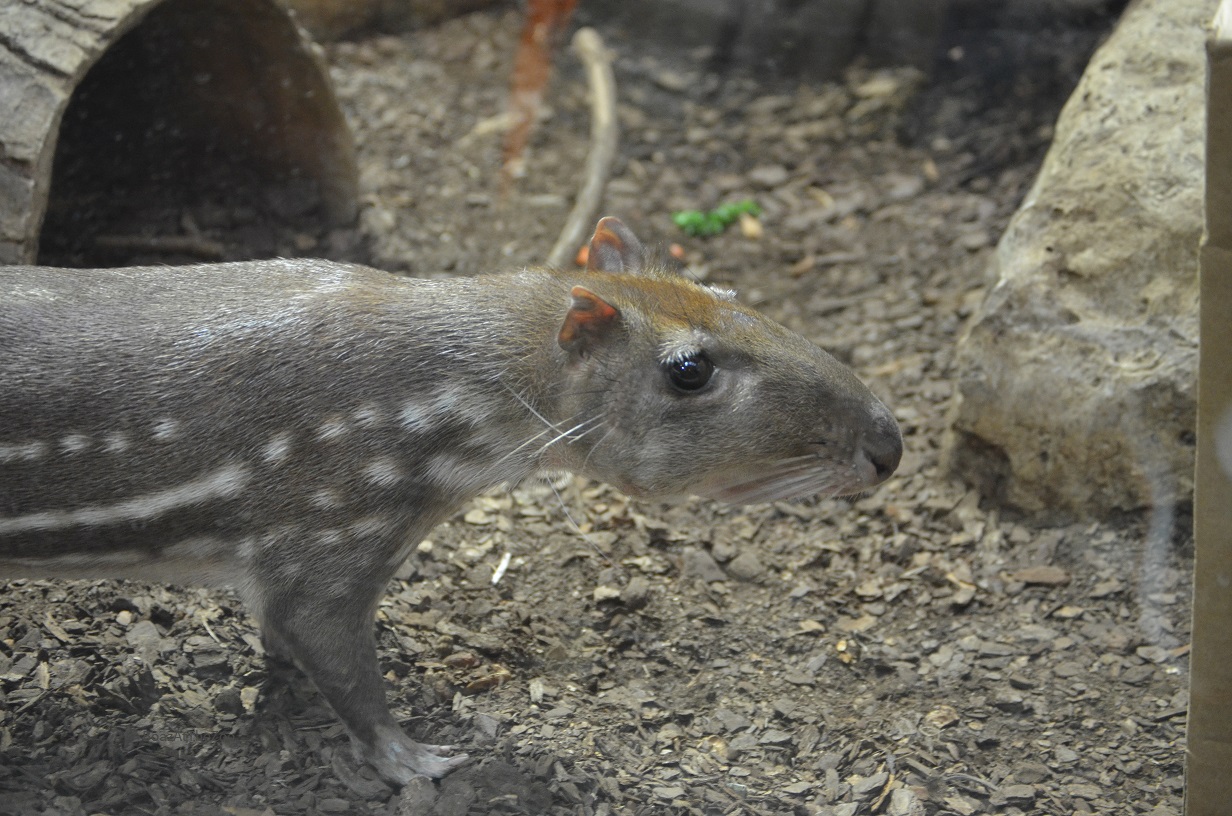
lowland paca (Toledo Zoo)

I was wearing an orange sweatshirt this day, and that accounts for the vertical orange reflection. Somehow, part of the reflection aligned nearly perfectly with the paca's ears.


eastern chipmunk (Highbanks Metro Park)


Wednesday, January 30, 2019

In the snow redux, redux

I went to the Columbus Zoo Monday to find out if I could use my camera's exposure compensation feature effectively. There wasn't a heck of a lot of snow on the ground, but the prairie dogs were good test subjects.

In this photo, I added one increment, or "stop," of exposure compensation:

Black-tailed prairie dogs, photographed with +1 stop exposure compensation.

 There is no exposure compensation in this shot:

Black-tailed prairie dogs, photographed with no exposure compensation.

Snow dominated the camera's automatic exposure system. The camera perceived a bright scene and reduced the amount of light that hit the image sensor to get a "correct" exposure. However, based on the photos from my previous trip to the zoo, I figured the image would be too dark (underexposed). I added one stop of positive exposure compensation to make the scene brighter over all and render the prairie dogs close to their actual color. The trade-off is a loss of detail in the snow, but that's okay because I was interested in the prairie dogs and not the snow. I call my test a success.